- The Boekenboot or Book Boat in English will be part of the 2026 WorldPride Canal Parade. Could you tell us some more about that event.
The Boekenboot (Book Boat) is a joint initiative of the Dutch book sector that will take part in the WorldPride Amsterdam 2026 Canal Parade. It brings together libraries, authors, illustrators, publishers, booksellers, literary organisations and reading promotion organisations under one shared message: Free the Word – Every Story Counts. For the first time, such a broad coalition from the Dutch literary and library world is participating together in the Canal Parade. The boat celebrates the power of stories to create understanding, recognition and connection, while also drawing attention to the growing pressure on queer stories, writers and freedom of expression worldwide.
2. You will sail the vessel under the motto ‘Free the Word – Every Story Counts’. What is the aim of the Boekenboot and what triggered you to start this initiative?
The idea emerged from a shared concern across the Dutch book sector. Around the world, queer books are increasingly challenged, removed from libraries and schools, censored or banned altogether. At the same time, authors and creators are facing growing pressure simply for telling these stories.
As organisations that believe in free access to information, literature and culture, we felt it was important to make a visible, collective statement. The Book Boat is both a celebration of LGBTQIA+ stories and communities, and a statement in support of the freedom to write, publish, read and share stories without censorship.
The timing is especially meaningful because Amsterdam is hosting WorldPride 2026, under the theme UNITY. That theme strongly resonates with what libraries and the wider book sector stand for: creating space for every story and every reader.
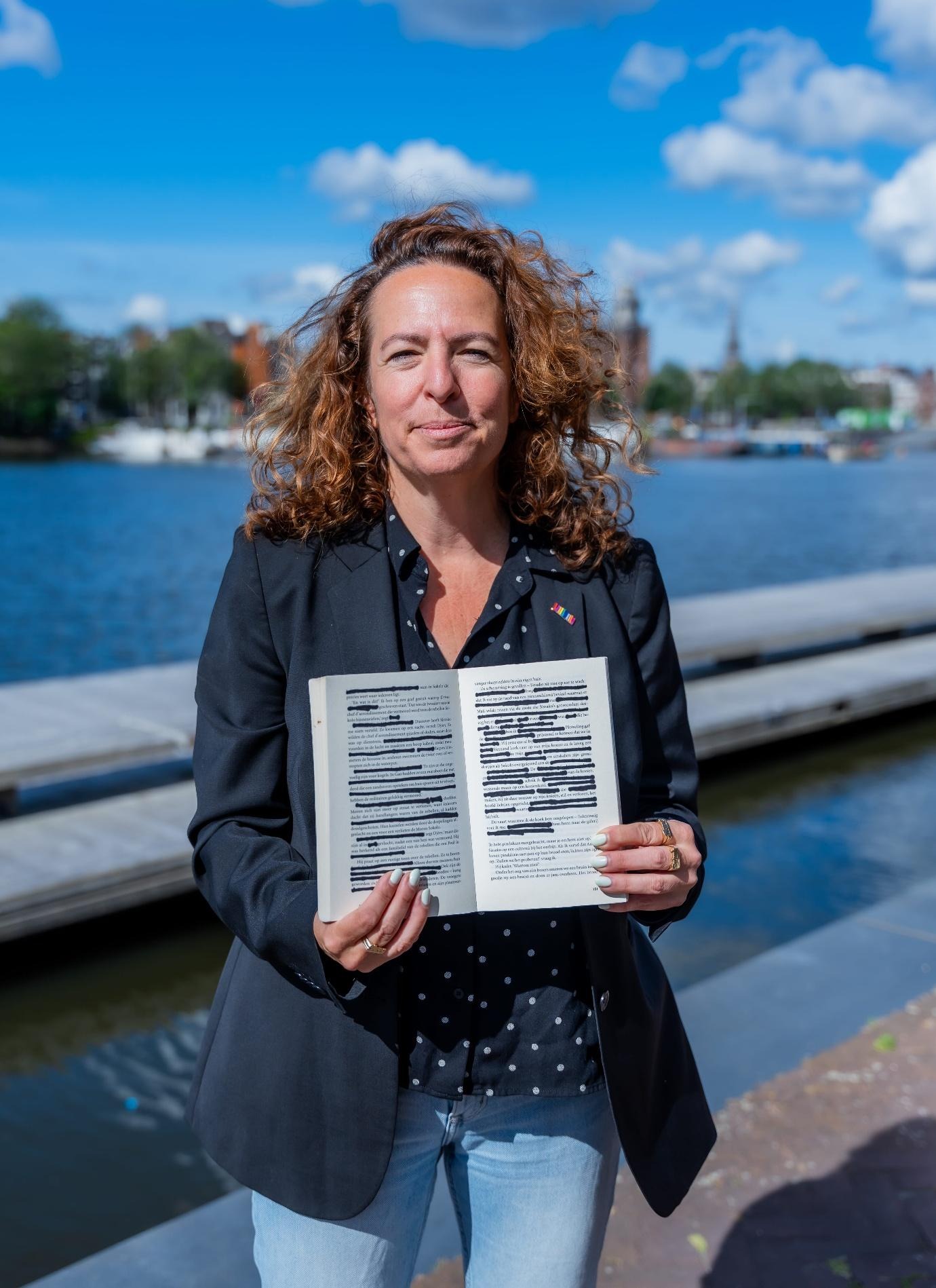
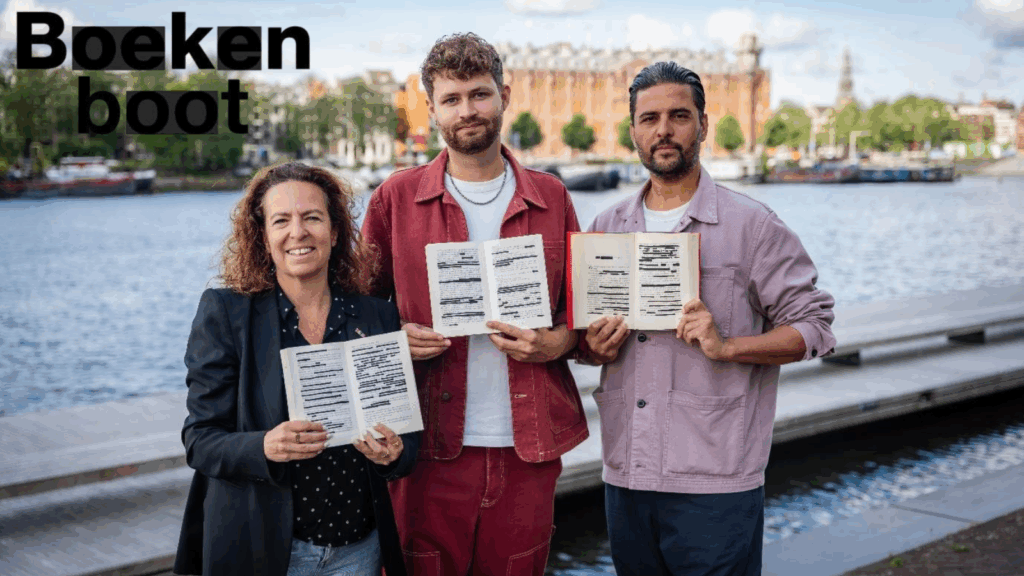
There will be about 100 participants on the boat: some notable participants are Pim Lammers, Haroon Ali (both captured in photograph), Xillan Macrooy, Hanna Bervoets, Maurits de Bruijn, Fleur Pierets, Haroon Ali, Maartje Wortel, Tobi Lakmaker, Pete Wu, Tatjana Almuli, Tofik Dibi, Ted van Lieshout en Jip van den Toorn.
3. Can you tell us something about the design of the Boekenboot?
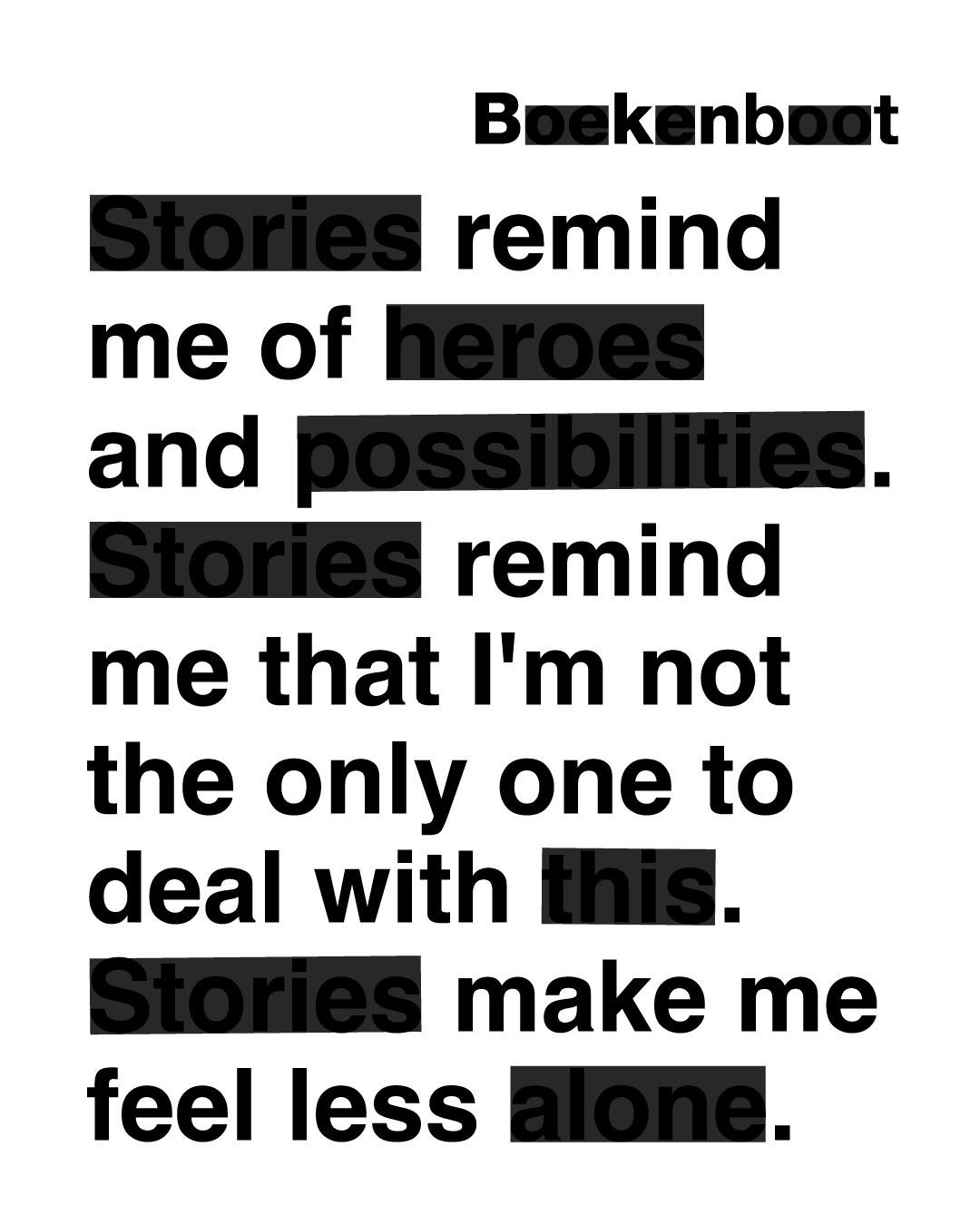
The Boekenboot is designed as a giant open book floating through the canals of Amsterdam. Throughout the parade, texts and illustrations created by the participating authors and illustrators appear across the boat. Some words are fully visible, while others are crossed out or hidden behind black censorship bars.
This visual language reflects the campaign message: making visible what censorship does to stories. During a key moment in the parade, the image transforms. Hidden words reappear, black bars give way to colour, and around one hundred participants simultaneously turn over their signs to reveal what had previously been obscured. The moment symbolises that stories—and the people behind them—cannot simply be erased.
4. When you think of queer book bans one might think of authoritarian regimes but not immediately of the Netherlands. Are you protesting queer book bans globally or is there also a message for the Netherlands too?
Our starting point is global, because the pressure on queer stories is undeniable. Around the world we see books removed from schools and libraries, authors being intimidated, and LGBTQIA+ stories being challenged or excluded from public collections.
But our message is certainly not only about other countries. The Netherlands does not face the same scale of organized book bans that we see in parts of the United States, yet that does not mean we are immune. We also see warning signs: opposition to drag queen reading events, threats directed at libraries, books about gender and sexuality being deliberately damaged or removed, and schools refusing to cooperate with libraries because they offer LGBTQIA+ materials.
For us, the issue is broader than formal censorship. It is about access. The moment certain stories are discouraged, stigmatized or quietly pushed aside, we should pay attention. The Boekenboot is therefore both an act of solidarity with people facing censorship worldwide and a reminder that an open, inclusive reading culture requires continuous care here in the Netherlands as well.
5. The US is an interesting case: we have seen a steady increase of book bans, typically around queer and race & racism themes (which publishers have been actively campaigning against, also in court), but at the same time queer literature has moved mainstream and has never been so popular (Opinion | We’re in a Golden Age of Queer Literature – The New York Times). Any perspective from your side on this?
We actually see these developments as two sides of the same reality.
The growing popularity of queer literature is something to celebrate. More readers than ever are finding stories that reflect a wider range of identities and experiences. That increased visibility has enriched literature and helped many people feel seen. The fact that queer books are reaching mainstream audiences demonstrates their cultural relevance and literary strength.
At the same time, visibility often triggers resistance. When marginalized voices become more prominent, there are sometimes attempts to push them back to the margins. In that sense, the rise in book challenges and bans can also be understood as a reaction to the growing presence and influence of these stories.
What gives us hope is that readers, librarians, booksellers, publishers and authors continue to defend the freedom to read. The popularity of queer literature shows there is a real public appetite for these stories. The debates around them only reinforce why access to diverse books remains so important.
6. Finally if you could give one key message to publishers worldwide what would it be?
Publishers should continue to publish boldly and trust readers.
Books are more than products; they create space for people to recognize themselves (mirror) and to understand lives different from their own (window). When certain stories disappear from shelves, it is not only literature that is diminished. It is democratic access to ideas, experiences and perspectives.
Our message is simple: diversity in publishing is not a trend or a political statement. It is a condition for a healthy en rich reading culture. Keep making room for voices that are challenged, questioned or underrepresented. Readers and society need those stories, perhaps now more than ever [For pictures: credit to Iris Janssen; first picture below is with Tamar van Gelder, top photo is Tamar with Pim Lammers and Haroon Ali].