
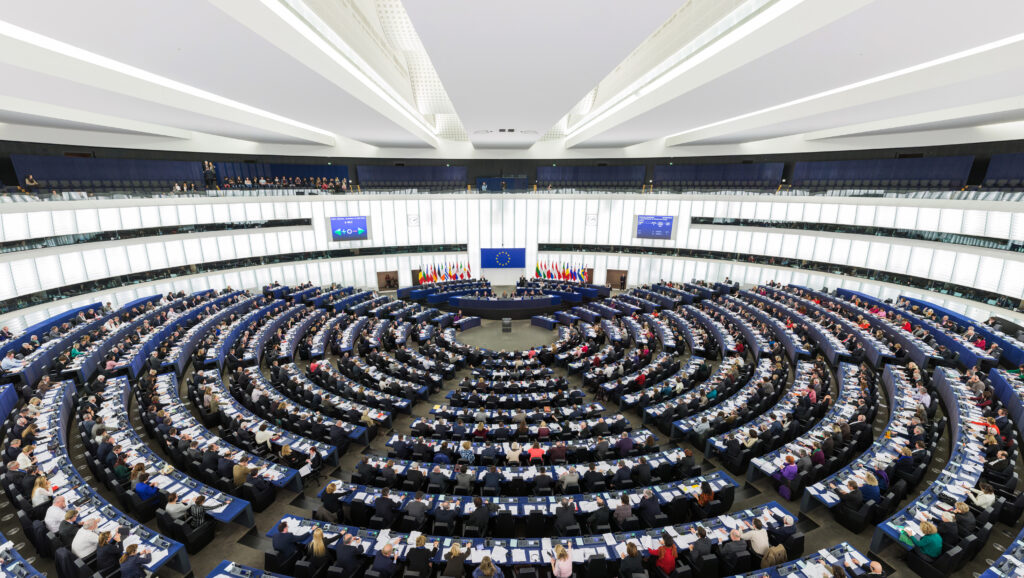
The adoption by the European Parliament of the amendment removing all printed products (books, newspapers and magazines) from the scope of the Deforestation Regulation. A ‘trilogue’ meeting of the European Parliament, Commission and Council will take place in December and differing views reconciled – in much the same way that a trilogue in December 2024 agreed the last-minute postponement of one year.
Reacting to the European Parliament Vote, Sonia Draga, FEP President, said “The recent Commission proposal to simplify the EU Deforestation Regulation (EUDR) has been a welcome step in the right direction; however, it fails to recognise the specific and complex production and distribution chains of printed products. Books are so far down the supply chain that the information requirements and overall administrative burden would be dramatically disproportionate. In addition, millions of books would have risked destruction because the Regulation would prevent their import into the EU – a disastrous outcome made even more absurd as the consequence of legislation intended to protect the world’s forests. Many more books and journals would be prevented from entering the EU, thus severely limiting the possibility for libraries to acquire content from outside the EU – with a very detrimental impact especially for science and research in Europe. Books are already sustainable; they are generally produced from certified, to a large part recycled, or sustainably managed sources. They are sources of content and information and should not be treated as commodities. Including them in the EUDR adds red tape but no measurable environmental benefit. FEP calls on the co-legislators to sustain this removal”.
Peter Kraus vom Cleff, Managing Director of IPA member the Börsenverein des Deutschen Buchhandels added “It is crucial that the regulation starts primarily where deforestation actually takes place, i.e. on the cultivation and production areas. The inclusion of printed matter within the scope of the EUDR was not originally provided for in the Commission proposal. An impact assessment has therefore never taken place. We thank all the Members of the European Parliament who have worked with great understanding for our interests. Now the position of the European Parliament still has to be enforced in the trilogue.”
AIE President, Innocenzo Cipolletta said “Today, the European Parliament recognized the inadequacy of including books, newspapers, and magazines within the scope of the Deforestation Regulation, adopting an amendment excluding them by 449 votes in favor and 202 against. This is an important step in the negotiations with the European Commission and Council, which will continue in the trilogue. We thank the MEPs for this result and for sharing the publishing industry’s concerns.”
“The publishing industry has long been committed to greater environmental sustainability, in line with the objectives of the regulation. Indeed, books, newspapers, and magazines have been using paper from certified sources, recycled, or responsibly managed for years,” the presidents observed. “The regulation fails to take into account the specificities of our sector. If applied, it would entail entirely disproportionate burdens, compromising the role of publishing in the cultural and democratic growth of society.”
“By recognizing the interests of our sector,” they continued, “Parliament has taken an important step in defending the pluralism of information and culture. We now trust that the Italian government will support this important amendment during the trilogue.”
Dan Conway, CEO of the Publishers Association in the UK, said: “This common sense support by the European Parliament to exclude books from the EUDR legislation recognises the complexity of book production and distribution compared to simpler, single origin commodities for which the legislation was conceived. Our members’ commitment to a greener, cleaner and more sustainable publishing industry remains unwavering. The passing of this amendment – which we hope will be agreed with the European Council and Commission shortly – will enable publishers to redouble their efforts on other areas where significant gains can be made.”