
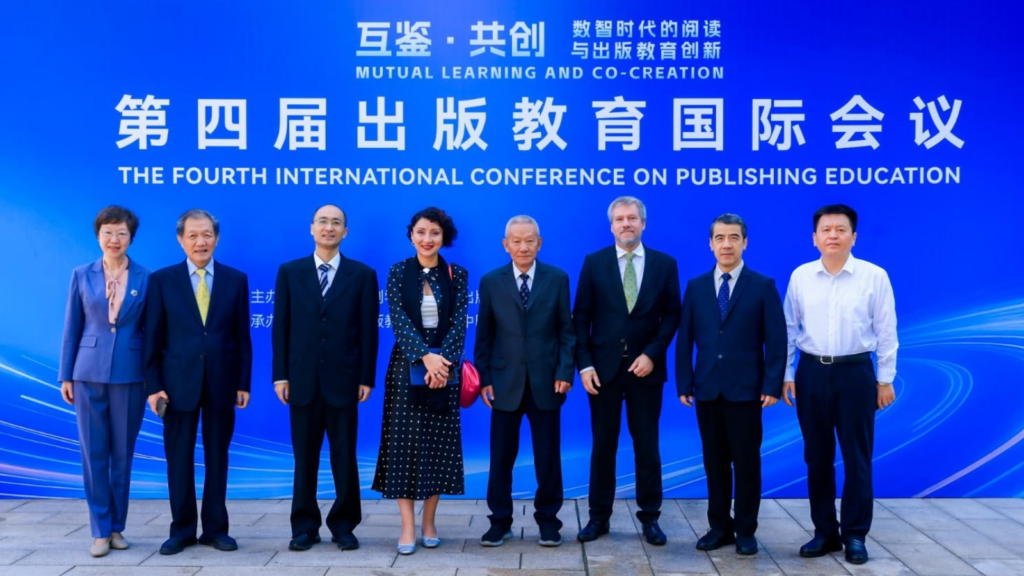
During the Beijing International Book Fair, IPA President, Gvantsa Jobava, delivered a series of keynote addresses about the complex relationship between traditional publishing and modern digital platforms. Her speeches noted that new technological tools, notably AI platforms, operate through statistical analysis and imitation rather than genuine intelligence, highlighting a distinct gap in accountability. While publishers take full legal and moral responsibility for the works they produce, technology companies frequently deflect blame for automated errors and machine outputs.
Protecting intellectual property was a central theme. The unauthorized extraction of professionally verified books to train data models undermines the creative economy. Sustainable progress is only possible through formal licensing frameworks that guarantee credit, consent, and compensation for creators, a practice already being fought for by publishers in countries like Sweden, the UK, Australia, France, and the USA.
Addressing the global decline in reading rates, Gvantsa Jobava maintained that the core purpose of publishing – discovering, refining, and distributing high-quality writing, does not require fundamental reinvention. Instead, technology should be adopted ethically to enhance existing processes like accessibility, translation, and distribution. Looking forward to the upcoming International Publishers Congress in Malaysia, the addresses called for closer cooperation between governments, publishers, and tech developers to uphold the freedom to publish and enforce robust copyright protection.