The freedom of expression and the freedom to publish are essential elements of a functioning democracy. One of the first symptoms of an authoritarian regime is the suppression of these freedoms, driven by the desire to control all communication and the type of information that citizens are allowed to receive and who are sadly often reduced to subjects of an absolutist power.
It happens all over the world, in many countries. Of course, Mexico is no exception. Far from it, our country is ranked as one of the most dangerous in the world for journalists. The Human Rights Center (HRC) of the University of California in Berkley recently published a study entitled “Under Attack: Targeting of Journalists and Human Rights Defenders in Mexico” in which it documented the assassination of 337 journalists and human rights defenders during the administration of former president Andrés Manuel López Obrador.
This is a country where we have normalized that a senator publicly threatens a journalist with “we’re coming after you.” A country where journalists, intellectuals, or anyone who expresses a different opinion from the regime are defamed and vilified every day from the presidential podium, with the full power of the state.
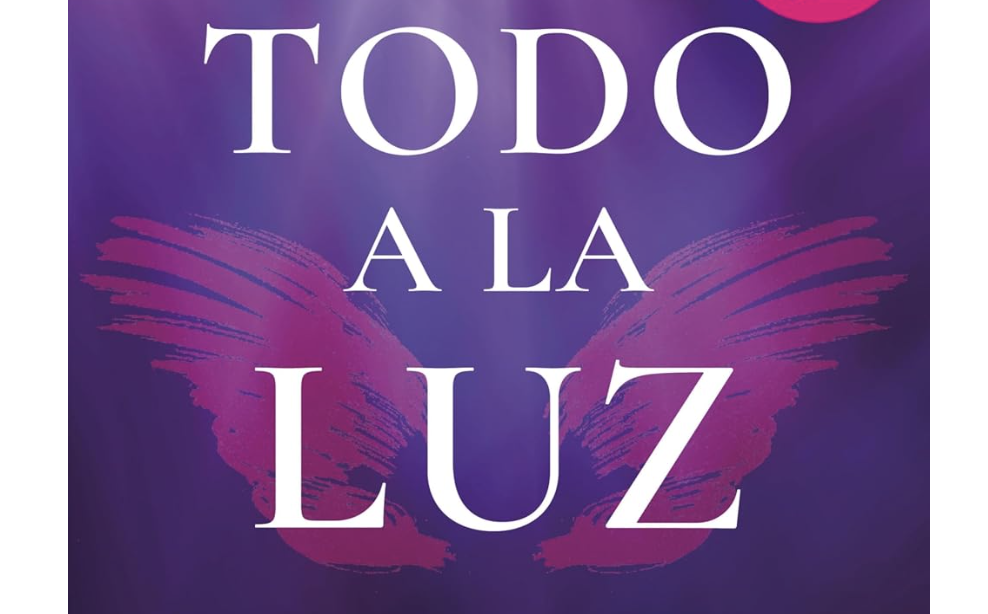
In this context, because it cannot be considered an isolated event, there is the case of “Gloria de los Ángeles Treviño Ruiz vs. Penguin Random House Grupo Editorial”, in which the Mexican Institute of Industrial Property (IMPI) imposed a fine of hundreds of thousands of pesos on the publishing house Penguin Random House for having used the name and image of pop singer Gloria Trevi in a journalistic investigation book entitled “Todo a la luz” (Everything under the light).
There are, indeed, certain provisions in the Federal Copyright Law that rightly protect individuals, especially performers, from the potential illegal commercial exploitation of their image and voice, since that is how they make their living. A performer’s voice is equivalent to the written text of a literary author.
However, when the IMPI determined that Penguin committed a trade violation and imposed a stratospheric penalty, it became clear that its expeditious officials, swift to impose sanctions, did not properly read the law and its regulations.
Article 74 of the Regulations of the Federal Copyright Law states verbatim: “For the purposes of section II of article 231 of the law, the use of a person’s image without the corresponding authorization will not constitute an infringement in matters of commerce, when it is done for informative or journalistic purposes or in the exercise of the right of freedom of expression.”
The job of journalists is not to flatter people with fame or economic or political power, but to conduct critical research and inform the public of their findings. They do this through various media outlets, often by the publication of a book.
This is undoubtedly one of the pillars of a democratic society. The freedoms of expression and to publish are not only a fundamental human right, but the very foundation of a democratic and pluralistic society.
In autocracies, dissenting voices are suppressed and silenced. In Nicaragua, dissidents were stripped of their citizenship and forced into exile. In Cuba, regime critics are imprisoned, and in Russia, they are murdered.
Mexico is not free from violence. In a country where journalists are murdered with unprecedented frequency, where critical voices, like that of María Amparo Casar (who’s case has been featured in a recent report of PEN International) and so many others, are harassed every morning from the Presidential Palace, where lists of journalists deemed inconvenient by the government are made public, and where citizens are forced to publicly apologize for criticizing corrupt politicians, the IMPI sanction definitely feels like censorship.
Penguin Random House is committed to entertaining with its novels, but also to providing truthful information through its non-fiction books. It has published many works that have made powerful people uncomfortable and has faced increasing censorship, but it has never given up.
Another interesting element is that the law stipulates that, for a penalty to be imposed, there must be direct or indirect profit involved. This is important to prevent the “piracy” of performers’ work.
However, proving that Penguin is profiting from Ms. Treviño’s image is an uphill battle. Firstly, a company like Penguin doesn’t need to, and secondly, the publisher didn’t exploit the artist’s name to deceive and obtain illicit gain. Her name simply appears in a journalistic investigation.
Of course, a publishing house sells its books and earns revenue from them (though not always profit), just like any business that offers products or services. That’s what allows us publishers to continue publishing the intellectual creation of thousands of authors.
However, this issue goes far beyond the interests of any one company. If this unjust sanction stands, investigative journalism in Mexico will be finished. It would set a very serious precedent for censorship.
In this way, little by little, without us realizing it, all spaces for critical thinking and dissent are being closed off, in favor of the single thought promoted by the state.
In these times, when we are lied to every day, it’s hard to know what to believe. As Hannah Arendt said: “The purpose of constant lying is not to make people believe a lie, but to ensure that no one believes in anything anymore. People who can no longer distinguish between truth and falsehood cannot distinguish between good and evil. And such people, deprived of the power to think and judge, are, without knowing it or wanting it, completely subject to the reign of lies. With such people, you can do whatever you want.”
Let us not allow those in power to do whatever they want with us. Let us maintain our capacity for critical thinking and defend the freedom to express it. It is our last stronghold against authoritarianism.