
For those looking for a refresher on what happened at SCCR 46, you can see our posts here, and the Chair’s summary here.
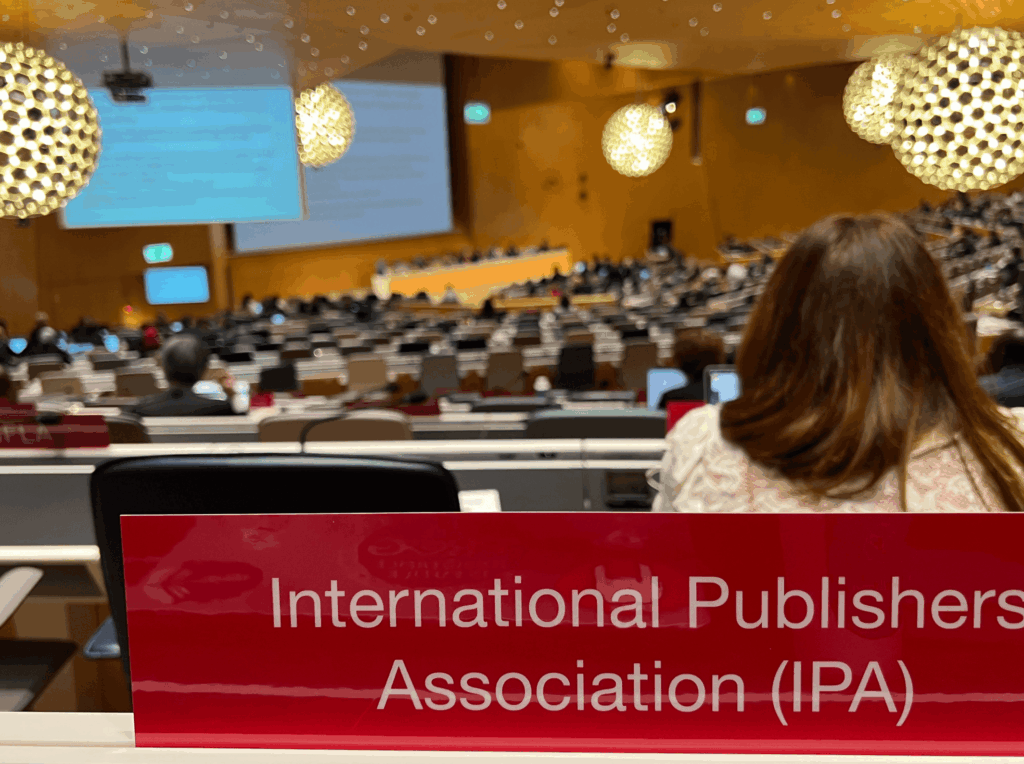
SCCR 47 opened with welcoming remarks by the Chair, Vanessa Cohen (Costa Rica), who emphasised the importance of collaboration and the impact of committee decisions on fields like education, cultural preservation, entertainment, investment, and the economy. Deputy Director General, Sylvie Forbin, noted the range of proposals on the table for this SCCR and welcomed that as a positive sign of Member State engagement in the work of the committee.
As part of a new, WIPO-wide procedure, the Committee elected long-term vice chair Peter Labody (Hungary, vice chair since 2019) as Chair starting at the next SCCR with Vice Chair positions remaining open for nominations throughout the week. The war in Ukraine remains an issue affecting the local copyright industries and was addressed by Member States.
The agenda was duly adopted and looks broadly similar to previous SCCRs: the protection of broadcasting organizations; limitations and exceptions for libraries, archives, educational and research institutions and for persons with other disabilities; as well as other matters such as copyright in the digital environment and an information session on generative AI. Concerns about slow progress, time allocation and topics were already bubbling to the surface with some Member States calling for continued efforts to seek consensus.
Member States approve the admission of ten new organizations as observers covering music, visual arts, choreography, and copyright interests from a range of countries.
The first side event of the week Vision, Risk-taking and Strong Copyright – Three Tenets for Success in Film Production was organized by the International Federation of Film Producers’ Associations (FIAPF). Bertrand Moullier (FIAPF) guided Pierre Mazars (CEE Animation), Eve Gabereau (Modern Films Entertainment), and Philipp Kreuzer (Maze Pictures) in sharing the risks associated with movie production and distribution, and how copyright is a fundamental part of the financing of films which enables sales agents, distributors and producers to take those risks and bring films to audiences. Case studies included Oscar winner Flow, Silver Lion winner Vermiglio, and the adaptation of Haruki Murakami’s Drive My Car.
The Broadcasting Treaty dominated the afternoon. Following a presentation of the updates to the text of the Draft WIPO Broadcasting Organizations Treaty by Labody, Facilitator Hezekiel Oira (Kenya) presented research on signal piracy in Africa. Regional groups were given the floor with familiar concerns about a signal-based approach and the evolution of broadcasting since discussions began 25 years ago. The African Group and individual Member States throughout the day called for discussions of Broadcasting to be kept together with Exceptions and Limitations. Brazil called for Broadcasting to be either shifted to a Diplomatic Conference or to be temporarily taken off the agenda for further discussions among interested stakeholders. The UK rejected this suggestion. The path forward remains unclear and, after a series of observer statements, the day was brought to a close early.
Day two will resume on Broadcasting, in ‘informals’ where Member States leave the plenary and discuss issues without necessarily committing formally to any language, as has been regular practice in previous SCCRs. However, in a twist, tomorrow’s informals will not be made available to observers in the plenary, who used to be able to listen in although we couldn’t report on the details of the discussions.
The day concluded with the Launch of WIPO Lex Archives Exhibition which will be open all week for delegates to enjoy in the lobby of WIPO’s AB Building.