The plenary chamber was full for the presentation of the Access Toolkit with the report’s authors (Joel Baloyi, Kenneth D. Crews, Rina Elster Pantalony and David Sutton) sharing presentation duties, with Sutton taking a moment to pay a fitting tribute to the fifth author, Carole Newman, who sadly passed away.
The authors described the history of the toolkit process as well as the drafting and consultation process. They went to great lengths to explain what they believe the toolkit is not: not normative, not prescriptive, it is not a text book, it is not an advocacy document. They went on to look at the types of access that libraries, archives and museums need and how different legal regimes allow that.
Few Member States shared their comments with the EU noting that licensing ‘should not be presented only as a risk mitigation technique but as a means to provide access to protected works in full legal certainty’ and the USA still feeling the need to reiterate that the toolkits ‘are not intended as norm setting documents’. Maybe they hadn’t been persuaded.
Many more observers took the floor however with many welcoming the work but also warning against the risks of poorly drafted exceptions and calling for stronger language on the value of licensing and exclusive rights. The Co-Chair of IPA’s Copyright Committee, Catriona MacLeod Stephenson, took the floor to share IPA’s comments:
Thank you, Mr Chair.
We thank the Secretariat and authors for their diligent work and collaborative approach to incorporating stakeholder feedback.
We welcome the recognition of licensing as a primary, effective modality for access, reflecting key feedback from the publishing community.
To keep this a strictly non-normative guide, we offer three brief further suggestions that we believe align with the shared goals of many member states here today.
• First: we thank you for acknowledging in your remarks the calls for balance and are happy to discuss where we feel copyright can be underlined as the essential, positive foundation and incentive to creation.
• Second: Drawing a clear distinction between historical artifacts and commercially-available works, the latter not being the target of this toolkit.
• Third: we see an important opportunity to provide clarity around terms such as “archive” and “library” to avoid overbroad exceptions that could facilitate piracy or unauthorised generative AI training – thinking of Internet Archive in the US and the giant pirate network Z-library who are certainly not the intended beneficiaries of this toolkit.
Procedurally, when do you expect this toolkit to go from being a draft to being published?
Thank you, Mr Chair.
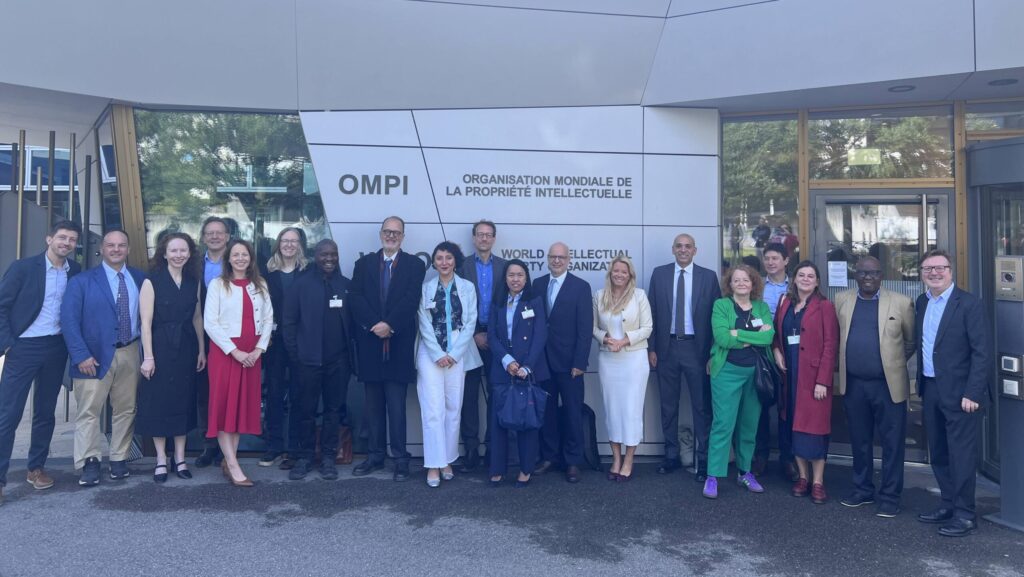
With that the chair moved discussions to informals for the rest of the day, leaving the plenary chamber empty, save a few observers. IPA took advantages of the breaks to hold meetings with Groups and individual Member States as well as to gather its full delegation together for the traditional group photo.
The lunch time side event was co-organised by AEPO-ARTIS, FILAIE, FIM, IMARA and SCAPR and looked at 30 years since the adoption of the WIPO Performers and Phonograms Treaty and how musician’s rights had evolved with the advent of digital music platforms featuring both legal analysis from Professor André Lucas and a more personal experience from musician Hélène Mourot.
On the subject of side-events, the previous evening had seen IFPI host a discussion on the success of Latin music covering both the broad success of music from the region, with digital platforms contributing to acts going from national, to regional and then international success. Venezuelan musician NOREH shared his own career path and acknowledged the vital role of the teams around him in helping him bring his music to bigger audiences (before giving the WIPO audience a live performance).
With informals continuing until 6pm, IPA closed a relatively quiet day 3 of SCCR 48 with a powerful side event looking at the impact of copyright on publishing in Africa and Latin America. Opened by IPA President, Gvantsa Jobava, and led by the Co-Chair of IPA’s Copyright Committee, Catriona MacLeod Stevenson, the session saw Brian Wafawarowa (a publisher), and Professor Sihawukele Ngubane (an author) from South Africa, publisher Ahmed Rashad from Egypt, and Dante Cid from Brazil present the realities on the ground of the current copyright regimes in their respective countries as well as the potential impact of the discussion on exceptions and limitations at WIPO.
We will share the recording of the event here when we have it available.