
In advance of the London Book Fair, IPA’s Executive Committee met on Monday afternoon to discuss a range of issues that would be addressed during the sessions of the week at the fair.
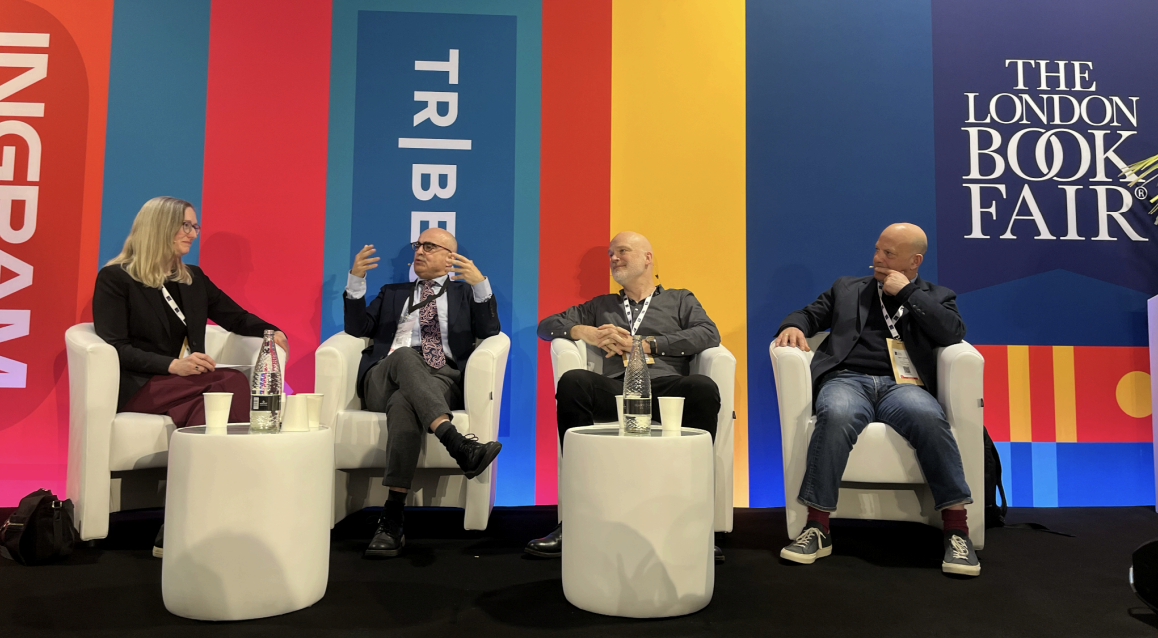
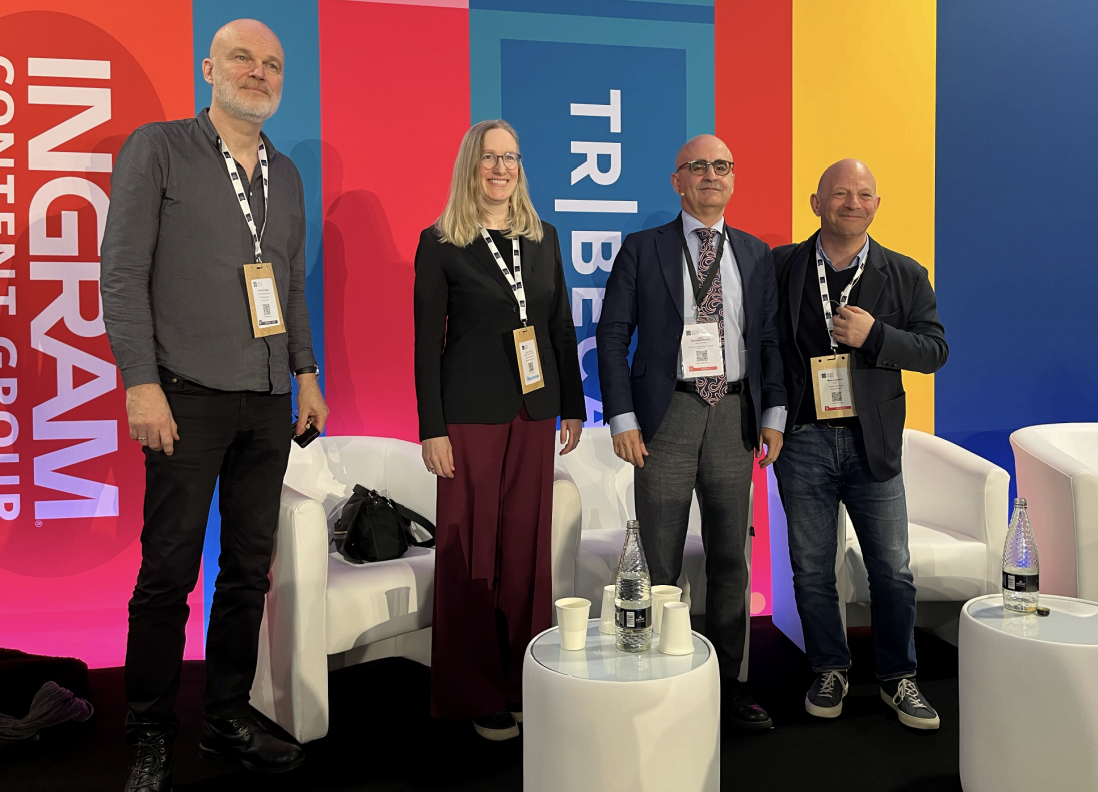
Following the opening, a panel was held on “Reading and Democracy: Coalitions for the Future” at the Main Stage. Moderated by the Chair of IPA’s Freedom to Publish Committee, Jessica Sänger (Director of European and International Affairs, Börsenverein des Deutschen Buchhandels and Chair of the IPA’s Freedom to Publish Committee), the panelists included Luis González Martín (Director General, Fundación GSR), Marc Lambert (CEO, Scottish Book Trust), and Arne Svingen (Fiction Writer and International Secretary in PEN International).
The talk started with a discussion about reading promotion around Europe. Luis González Martín stressed the importance of gathering and comparing data to be ready for future trends and to understand reading in terms of taxonomy. According to him, this is essential to implement different policies, prototypes and strategies for each kind of reading.
Arne Svingen then turned to the situation in Norway, where declining reading rates and the widespread replacement of paper-based reading with digital technologies in schools have become a growing cause for concern. In response, a Reading Commission, composed of writers and academics, was established to address the issue.
Reflecting on the interest of politicians about the topic, Marc Lambert highlighted the importance of coalitions of organizations that promote reading, writing and literacy, as they try to persuade the government that a long-term effort is needed to improve literacy rates and the desire to read.
Lambert said: “There are currently about 72 million people across Europe who struggle with literacy, and that’s a huge problem for the democracies and for the economies of Europe. What EU Read tries to do, this consortium of over 30 organizations right across Europe, the Scottish Book Trust is part of, and Book Trust in London as well, is to really tackle that at a central level in Brussels. That’s really complicated, it turns out, but that is a big focus for our effort, because what we need to have is a pan-European concentration on why reading and writing, and why being literate, are so important”.
Jessica Sänger then posed a question to the panelists: “What can people in this community do to support this need for higher-level reading and then be able to distinguish the misinformation, follow through with an argument, learn to change our mind about something we are reading about?” In response, the panelists emphasized that building coalitions is essential to promote reading and the enjoyment of it. They also stressed the importance of publishers crafting compelling narratives to persuade public bodies to take action.
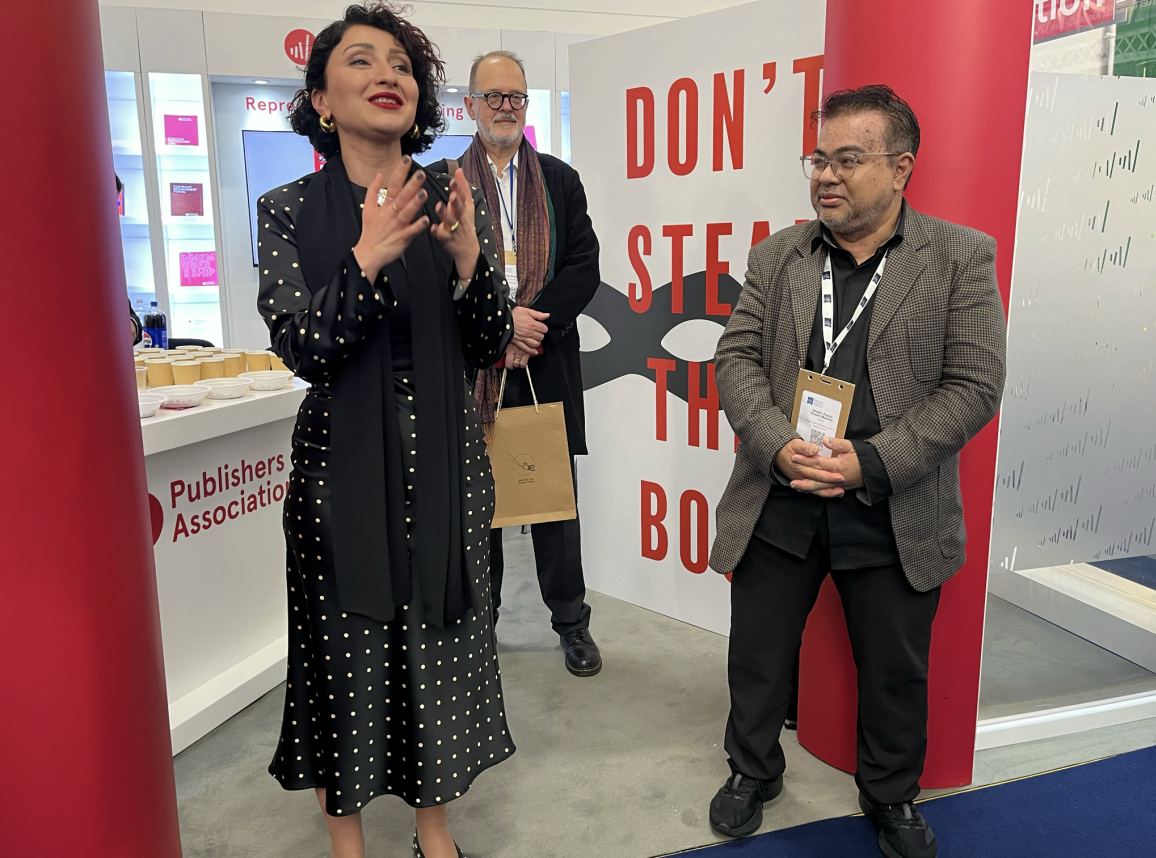
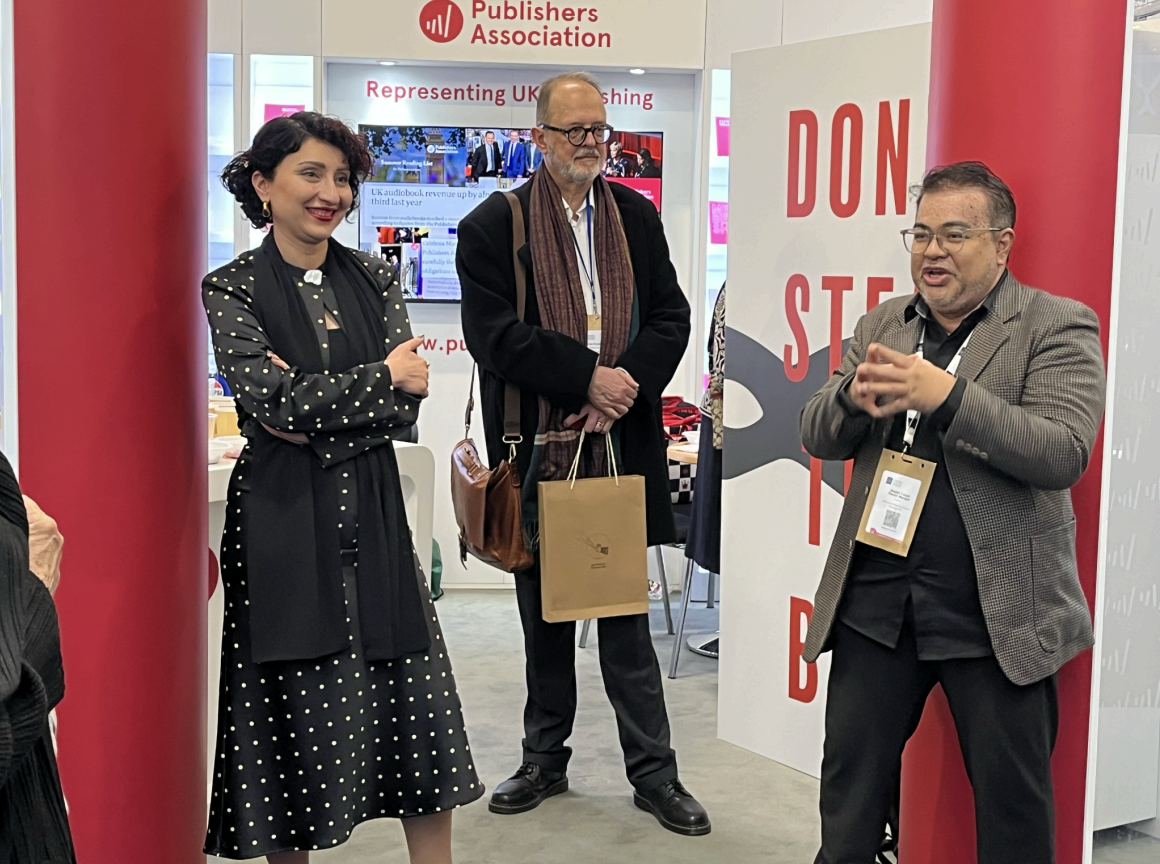
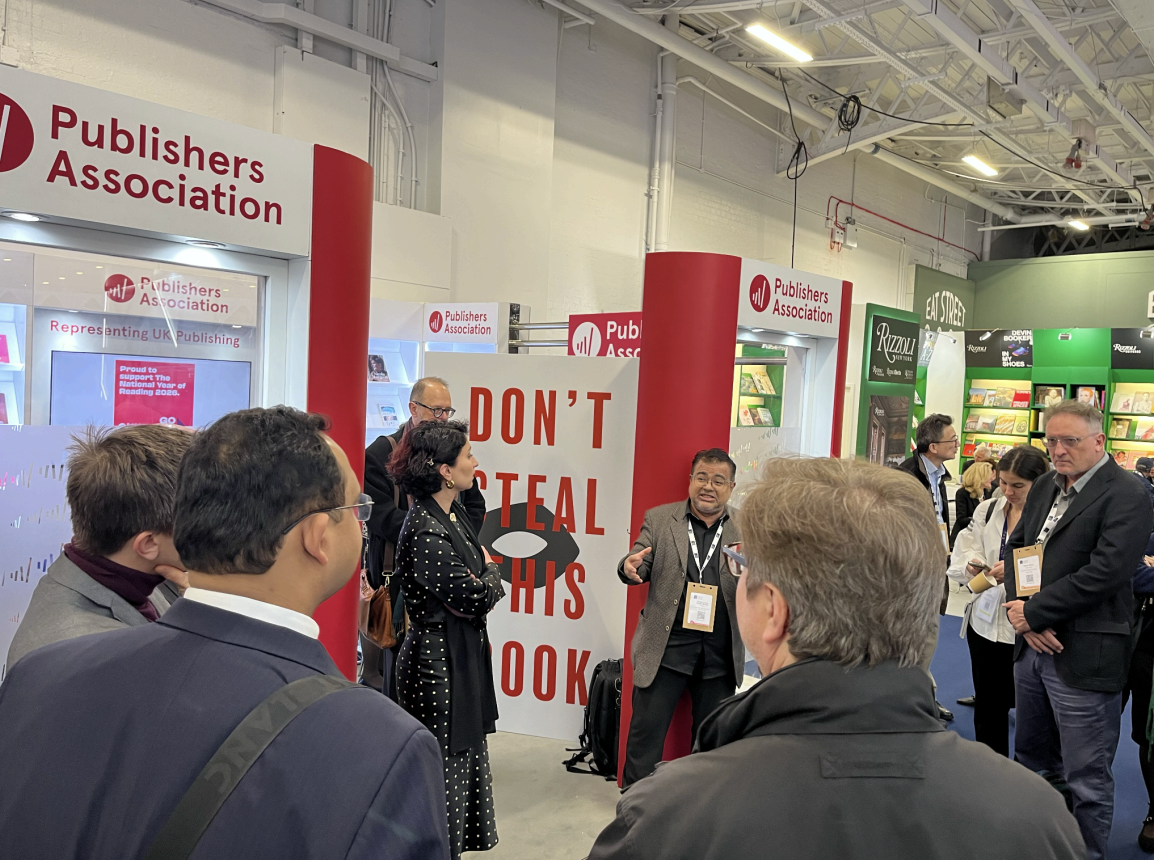
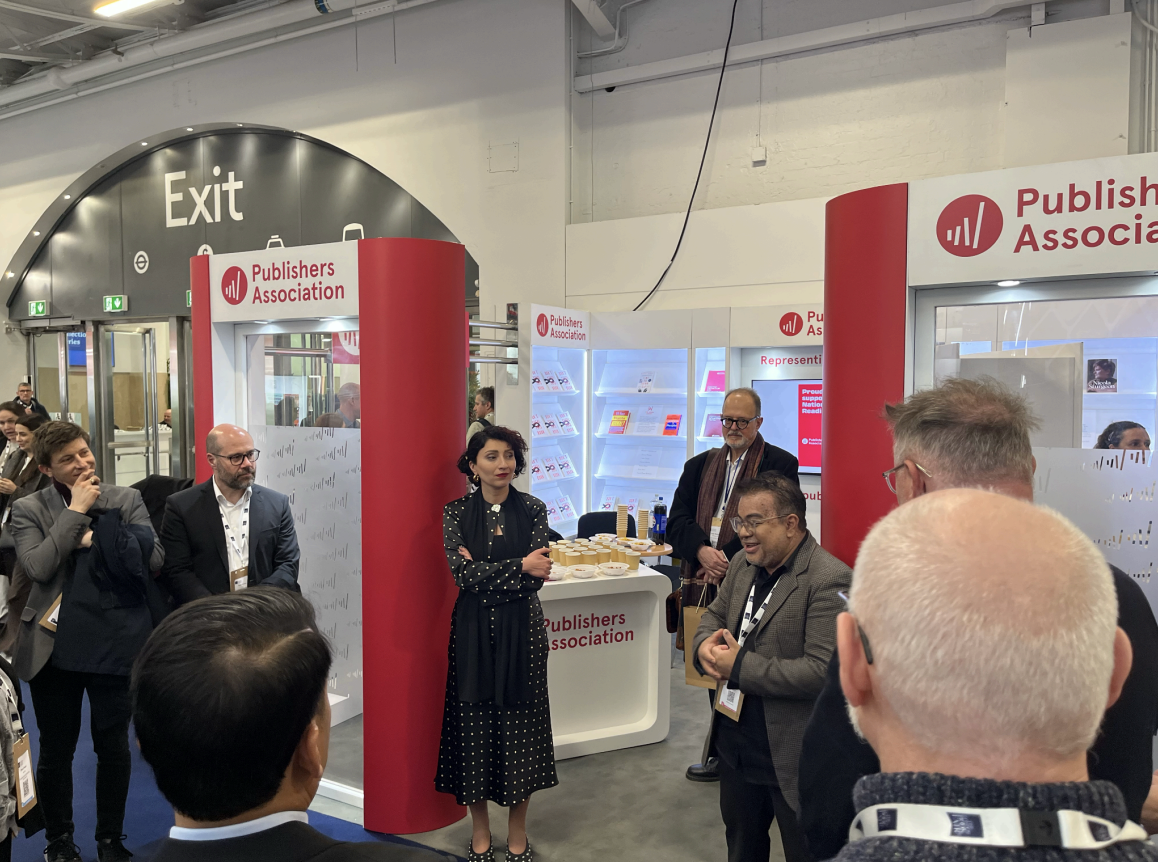
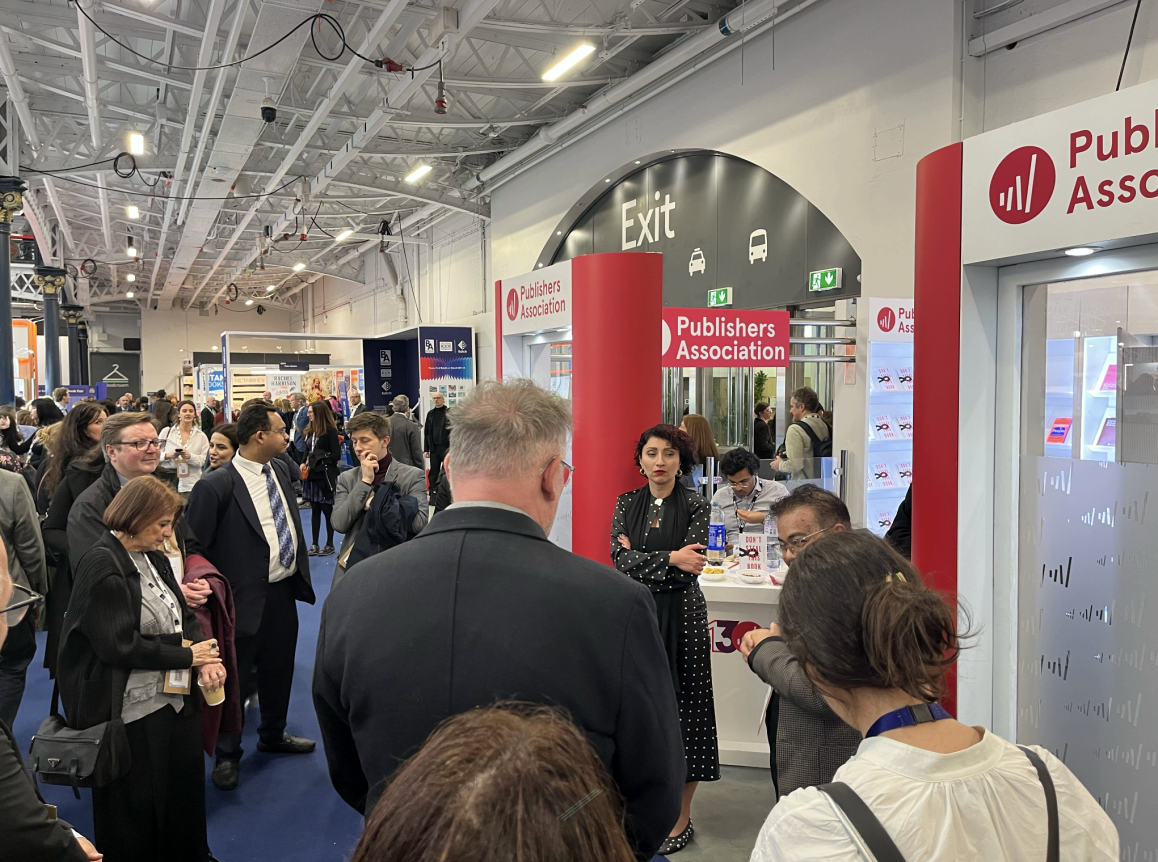
This was followed by the promotion of the 35th International Publishers Congress in Kuala Lumpur, Malaysia, at the stand of the UK Publishers Association. SFSM announced a special deal for Publishers Without Borders members to benefit from a discount (here).
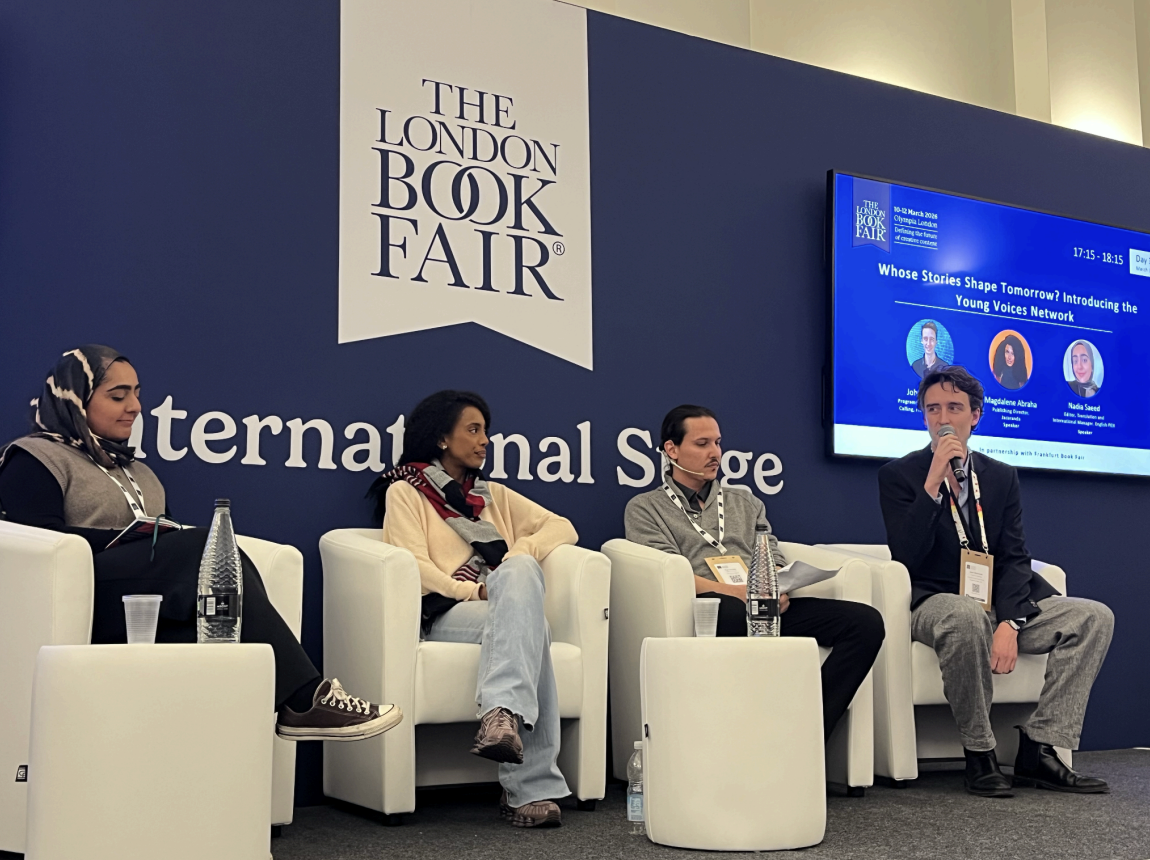
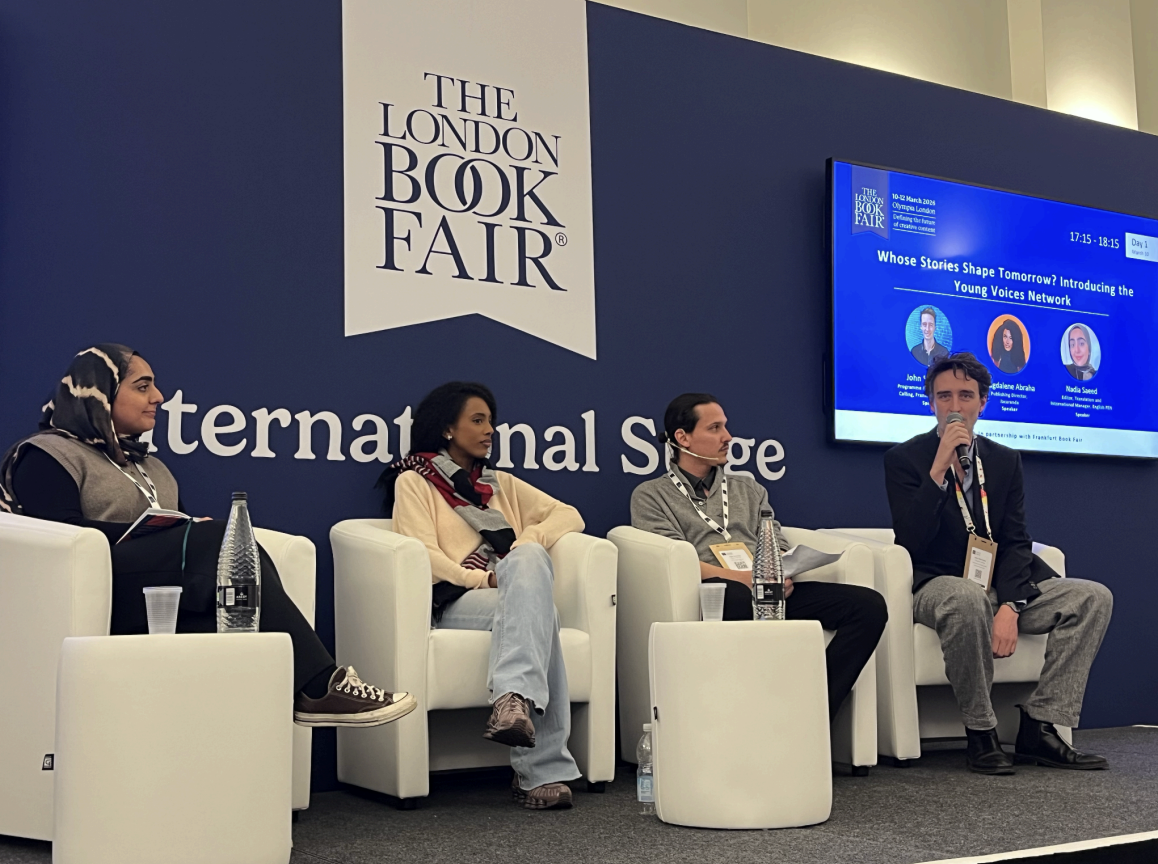
IPA’s day then continued at the panel “Whose Stories Shape Tomorrow? Introducing the Young Voices Network” at the International Stage. This joint event by Frankfurter Buchmesse and the London Book Fair introduced the Young Voices Network, launched in Frankfurt in cooperation with IPA, PEN International, and the World Expression Forum. Moderated by John Steinmark (Programme Manager, Frankfurter Buchmesse), the panelists included Ege Dündar (Board Member, PEN International), Nadia Saeed (Translation and International Manager, English PEN), and Magdalene Abraha (Publishing Director, Jacaranda).
Steinmark kicked off the discussion with the question: “Are young voices only invited into existing structures symbolically, or are they actually empowered to shape them?” He then presented the Young Voices Network, an initiative created last fall in Frankfurt, aiming to be a space where emerging publishers, writers, translators, booksellers, cultural workers, and activists can meet across borders and institutions and become connected with established industry figures, organizations, and networks.
Dündar shed light on the young voices that are neglected, marginalized, or silenced and still have a contagious courage to shape their societies and raise their aspirations for a better future. He commented on how significant it was for him to engage in a network of young voices – first, with the Tomorrow Club and Young and Writers Committee at PEN, and then, with the Young Voices Network. He also called attention to the lack of funding opportunities that affect and transform youth engagement into something largely symbolic.
Continuing the conversation, Saeed presented what English PEN has been doing to open access for the next generation of professionals, writers, translators, and others. She presented PEN Transmissions, an online magazine that platforms international voices across borders and showcases different works and brilliant minds that are working in the industry. When English PEN acknowledged that many young writers were not present on the platform, they started a series called Young Voices, aimed to platform writers between the ages of 20 to 25 years.
She explained that participation was not immediate, because young people have reshaped how they engage with literature and have kind of the infrastructure in which they exist currently, in the traditional sense, in terms of online magazines and traditional sorts of spaces. There was a real kind of long process of research and development that meant that we reached out to different stakeholders and different initiatives that were working with young people to then find the voices that PEN ended up platforming. According to her, the key to this initiative’s success was building trust within the community, particularly through the individuals that PEN platformed, so they felt confident collaborating with an international magazine.
Saeed stated, “We can use our clout and use our status to enable those voices to feel that they belong in this ecosystem. In terms of what we’re saying about risk, I think that obviously, with increasing censorship and people wanting to self-edit, we really don’t have the spaces for young writers, particularly to write bravely. So we as institutions should be able to shoulder the risk that could potentially come to young writers and just give them the space and let them run free with it, but then also shoulder whatever kind of backlash they get. So I think that kind of my advice would be to use your clout as an organization and don’t be afraid to go and reach out to young people.”
Getting into the conversation, Abraha shared her experience as an independent publisher on what needs to change in the literary ecosystem so that new and underrepresented voices can truly shape the future of publishing. She mentioned that the sector needs to focus less on competition and temporary interim initiatives when it comes to young and marginal voices. Instead, what is needed is something more structural, both from a funding and institutional perspective. To do so, collaboration is key.
Steinmark closed the panel, inviting the audience to exchange ideas and think about what something like a Young Voices Network could achieve together. The audience seized the opportunity and the conversations began.
IPA’s first day closed with a visit to the Publishers Without Borders reception.